Steve Skeldon, Above Ground Product Manager at Wavin explores how waterless traps support space in modern homes
With more housing estates and high-rise apartment blocks popping up across the country, the need for space optimisation is becoming increasingly important. From vanity units in bathrooms, to under the sink storage in tighter kitchens, plumbing systems need to be more compact.
While the traditional water-seal trap has served the industry for decades, the emergence of waterless traps offers a practical way to reclaim space taken up by previous systems. Here, Steve Skeldon, Above Ground Product Manager at Wavin, explores how the latest plumbing innovations can help combat the issues being faced in modern kitchen and bathroom installations.
Conventional traps in compact spaces
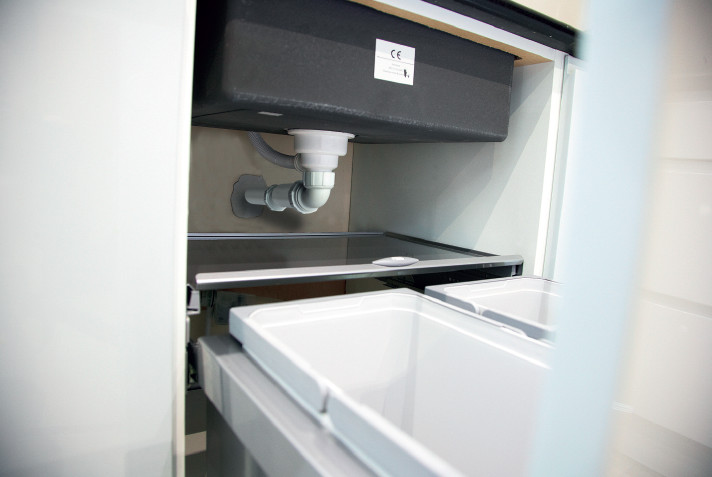
Traditional water traps rely on a retained water seal to prevent the ingress of sewer gases from entering habitable rooms. In most domestic systems, this arrangement takes the form of a U-bend or P-trap. The curved shape makes the fitting more prone to blockages from food waste, hair, and oil build-up, but can also create spatial challenges on modern developments. Under-sink storage has become a design priority in smaller kitchens, while vanity units in bathrooms are now standard. The shape and depth of a traditional traps often dictate how these units must be designed or cut around. For developers working within tight room modules such as apartments, even small gains in usable space can be valuable.
There is also the issue of maintenance and occupant experience. A water seal only works if it remains intact. Infrequent use, siphonage, evaporation, or even temperature changes can cause the trap to dry out, breaking the seal and allowing odours to enter the room. Industry research, including guidance from the Building Services Research and Information Association (BSRIA), notes that dry water-seal traps are a leading cause of indoor drainage smells in modern, airtight dwellings.
No water, no worries
Modern waterless traps, like Wavin’s Osma HepVO, replace the traditional water seal with a self-sealing membrane that performs the same function of preventing odours and gases from entering occupied spaces, without relying on standing water. The flexible silicone membrane opens to allow water through and closes afterwards to form a reliable space-saving airtight seal which isn’t compromised by evaporation, siphonage or movement.
One of the key advantages of waterless traps is they allow greater design flexibility and space efficiency thanks to its in-line space. The new and improved Osma HepVO waterless trap ensures installations are simpler and quicker to complete with the latest version featuring smoother, modern lines and clearly marked directional flow arrows, helping installers align fittings more easily. The compact design allows the unit to be installed vertically or horizontally, making it ideal for confined spaces such as behind pedestal basins, within slimline kitchen units, or beneath baths. In each case, the trap’s streamlined design helps overcome the space constraints that often complicate installation. For example, when used under a bath, it eliminates the need to cut into the floor to accommodate the bend of a traditional U- or P-trap. Similarly, in kitchen or bathroom cabinetry, its slim shape frees up valuable storage space – an important benefit in smaller homes and apartments.
For developers, this flexibility supports more adaptable layouts and a cleaner overall aesthetic without compromising drainage performance. Waterless traps also provide consistent odour protection with minimal maintenance. The self-closing membrane remains sealed when not in use, maintaining a reliable barrier even after long periods of inactivity.
This is particularly useful in guest bathrooms, holiday properties or unoccupied dwellings during build and handover phases. In addition, the membrane design helps to stabilise pressure within the waste system, reducing the gurgling sounds often associated with traditional traps under negative pressure. Removing the stagnant water also means there is less opportunity for biofilm or residue to accumulate, improving overall hygiene and reducing the need for cleaning or servicing.
Looking forward
For developers and housebuilders focused on delivering compact, efficient and low-maintenance homes, reevaluating traditional plumbing components can result in many design and operational benefits.
Waterless trap systems like HepVO demonstrate how small changes in specification can enhance both the build and the end-user experience. They provide valuable design flexibility for modern cabinetry layout, without reliance on water seals, and reduce the likelihood of odour-related maintenance issues. As building footprints tighten and expectations of quality continue to rise, these technologies illustrate how thoughtful product selection can quietly improve both construction efficiency and long-term occupant satisfaction.
For more details on Wavin’s HepVO waterless trap, please visit www.rdr.link/dbh033