As residential building projects grow more complex, with tighter regulations, evolving heating technologies and rising performance standards, it has never been more important to get the right technical advice at the earliest design stage. Robert Horak, Head of Sales – South at Maincor, part of wienerberger uK and Ireland, examines how a partnership approach built on expertise is helping to shape more efficient, compliant and futureproof homes.
Few can deny that residential building projects are facing a new level of complexity. A combination of regulatory change, technological innovation and growing expectations from end users are transforming how homes are designed, specified and built. For professional housebuilders and developers, this shifting landscape brings both opportunities and challenges – especially when it comes to heating systems, which are so integral to energy performance and carbon reduction targets.
When Parts F and L of the Building
Regulations were updated at the end of 2021, it was a pre-curser to the imminent Future Homes Standard. Changes around energy efficiency and heating provision have been designed to drive down carbon emissions in line with the UK’s net zero commitment. Notably, they also require a deeper understanding of how different systems interact within a home.
Heating technologies that were once standard, such as traditional gas boilers, are being phased out in favour of lowcarbon alternatives like heat pumps, underfloor heating systems and smart controls. Each technology has its own design parameters, installation requirements and performance implications, which means early-stage technical input is more important than ever.
At the same time, the move towards more airtight, highly insulated building envelopes has changed the thermal dynamics of modern homes. Modern heating systems must be designed to deliver comfort efficiently within these lower-temperature environments, without compromising compliance or energy performance.
Heating design can no longer be an afterthought. It must be integrated with other energy efficiency and building comfort technologies from the earliest design stage, informed by specialist expertise and coordinated across disciplines.
Working in partnership
With this in mind, manufacturers have a greater role to play, offering specialist technical advice about their own systems and the role they play in wholebuilding solutions.
With this support, project teams are better placed to identify potential issues before they become costly on site – from heat loss calculations and pipework layouts, to compatibility between heating systems and building fabric performance. This collaborative approach also ensures that systems are not only compliant with current Building Regulations, but optimised for long-term performance and end-user comfort.
At Maincor, we have seen first-hand how early technical input can drive the success of projects. Working alongside developers, their architects and other consultants, our team helps to model system performance, advise on product selection and provide detailed design support for low-temperature underfloor heating systems, as well as controls and radiator connections.
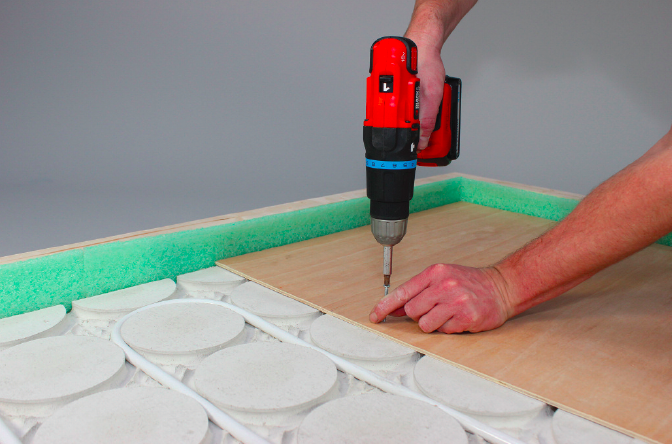
Underfloor heating, for example, can be easily combined with radiator systems for extensions and conservatories, or to create a mixed heating system offering radiators on upper floors if required. However, it is vital to understand the impact of each system on overall building performance, as well as any potential impact on compliance with Building Regulations.
This partnership approach helps to derisk the build process and streamline installation, but it also supports futureproofing.
The pace of regulatory and technological change means that homes designed today must be fit for purpose tomorrow. By combining on-the-ground experience with an understanding of emerging heating technologies and upcoming legislation such as the Future Homes Standard, we work with project partners from the earliest stage to create homes that are compliant at handover and resilient for decades to come.
Looking forwards Building better homes has always taken a collective effort. However, as the industry moves closer to the introduction of the Future Homes Standard, such collaboration will become not just beneficial, but essential. The demand for more efficient, lowercarbon housing is reshaping supply chains and placing greater emphasis on shared knowledge between manufacturers, developers and installers.
As a result, partnerships that prioritise collaboration and promote technical advancement will be best placed to deliver homes that meet growing expectations from regulators and homeowners alike. By working together from the earliest stages of design, the construction sector can navigate regulatory complexities today, whilst laying the foundations for sustainable, high-performance housing for tomorrow.
For more information go to www.rdr.link/dbh030